Small uplift in children's reading for enjoyment: what does the research say?
Children and young people’s enjoyment of reading and daily reading habits have risen for the first time in five years, having reached a 20-year low in 2025, according to our latest research.
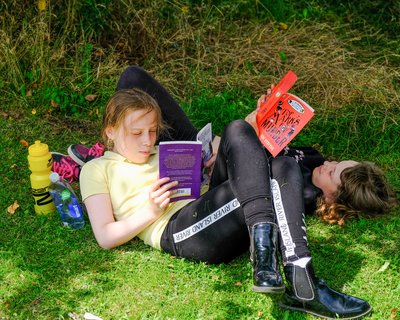
The latest report, taken from the results of 125,375 children and young people in the UK aged 5 to 18 from across the UK who completed our annual literacy survey, shows a small uplift in children and young people’s reading enjoyment and daily reading habits over the last year.
- More than 1 in 3 (36.1%) children and young people aged 8 to 18 say they enjoy reading in their free time
- Over 1 in 5 (20.3%) say they read something daily in their free time
Despite this rise, reading enjoyment (58.6% in 2016) and daily reading (32.0% in 2016) levels still lag significantly behind those of a decade ago, with the gender gap for younger children (aged 5 to 8) and the disadvantage gap for older children (aged 8-18) both widening.
READ OUR 2026 RESEARCH REPORT IN FULL
The findings are published during the National Year of Reading 2026 – the biggest campaign in a generation designed to inspire everyone to discover the joy of reading and embed it into everyday life.
If you're into it, read into it
We believe reading is a powerful plug-in to the things you already love – a great way to go deeper into your existing passions. We’re asking the nation to Go All In and see how reading in all its forms can unlock more of what you love.
More content
What are some of the key motivators for children and young people to read in their free time?
-
Reading to learn
-
Reading to pursue hobbies and interests
-
Reading to relax and unwind
-
Reading to understand more about themselves
-
Reading to better understand others
-
Being encouraged to do so by others
While the relationship between reading enjoyment and daily reading is crucial, new insights in our research indicates reading must also be relevant, meaningful and supported by people in children’s lives for it to become strongly embedded.
Relevance is particularly important for children who are the least engaged with reading; boys and children from disadvantaged backgrounds who don’t enjoy reading and who read less than once a week are more likely than their peers to say reading helps them explore their interests.
While more girls read for wellbeing and emotional support, more boys leaned toward reading to connect with causes or the wider world. Reading to build knowledge and skills was equally strong across genders.
Children and young people who report low levels of reading enjoyment, though less engaged, still recognise reading’s educational value - nearly half said it helps them learn new words or new things.
How can we support children and young people to grow a love of reading?
The findings from our 2026 report suggest a need to align reading with children and young people’s personal interests in order to encourage a love of reading in their free time. Our previous research has also offered insights into key motivators which encourage a child or young person to read, including the following:
More content
-
Books tied to films or TV series.
-
Books with visually appealing covers.
-
The freedom to choose what they could read.
-
Hearing recommendations from friends, family or teachers.
-
Encouraging reading through a variety of formats.
-
Consider using digital formats.
In fact, in 2025, half (49.3%) of children and young people told us they still read fiction or short stories in print each month and two in five (40.1%) read non-fiction books. Formats such as comics and graphic novels (29.2%) and magazines (21.3%) remain popular choices. Whilst digital formats dominated in other categories, with song lyrics (60.7%) and news articles (28.2%) mostly read on screens.
These insights are powerful.
They suggest that re-engagement is possible, especially if we personalise reading opportunities around interests, allow autonomy in choice, and better link reading to other media children and young people already recognise as part of their cultural life.
Why is reading for pleasure important?
There are many benefits to nurturing a love of reading in a child's free time. When children and young people enjoy reading they read more often, opening up benefits for their:
- reading skills,
- aptitude for learning,
- wellbeing and empathy,
- all of which set them up for success in school and life.
In fact, our research shows that children and young people who enjoy reading are significantly more likely to read regularly in their free time than those who don’t enjoy reading (49.8% vs 4.5%).
Together, let's continue to grow a reading culture at home and in school and empower children and young people with the skills they need to learn, to discover new things about the world around them, about the things they are interested in, about the people and cultures they may not yet know and new ways to explore their sense of self.
 Donate today and together, we can change a child's life story
New, positive steps from Education Select Committee will bring change
“The Committee's ambition that every child, regardless of where they live or their background, should have the opportunity to experience the joy of reading and the life-changing benefits it brings, closely aligns with our mission."
Jonathan Douglas CBE, Chief Executive of the National Literacy Trust
What are we doing to support children to discover a love of reading?
The importance of redefining reading as relevant, meaningful and social is central to the National Year of Reading 2026. As the campaign reaches its half-way point, and against a backdrop of multiple government commitments to support children and young people’s reading, we are calling for national leadership, sustained cross-sector partnerships and long-term investment to maintain this year’s upturn so every child can thrive.
Alongside our involvement in the National Year of Reading 2026 and over the next three years through our organisational strategy, we will continue in our commitment to directly support and empower 1.5 million more children and young people from disadvantaged communities to read for pleasure and develop greater confidence in their reading skills.
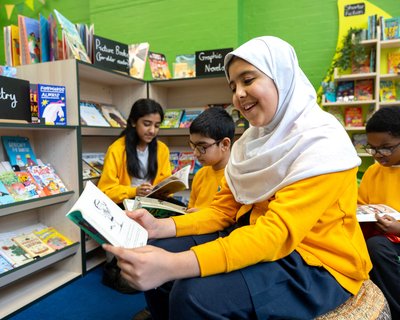
This includes ensuring every primary school has a dedicated library or reading space by 2028 through our Libraries for Primaries campaign and supporting young families with children aged 0 to 5 through Early Words Matter, which champions the crucial role of stories, songs and shared book experiences in building early language and emotional bonds that form the bedrock of future reading enjoyment and success.
We continue to target our work in the nation’s most deprived wards, where low literacy and poverty are having the greatest impact on people’s lives. In these high priority areas, where we work most intensively with schools and community partners, children and young people’s reading skills and engagement have significantly improved.
Last year, across our reading programmes delivered in primary and secondary schools throughout the UK, levels of reading confidence (84%), reading enjoyment (77%) and reading frequency (66%) increased significantly for pupils who were the least engaged with reading before taking part.
We continue to expand our current education programmes, offering high-quality reading for pleasure resources, and training opportunities for practitioners.
-
Our mission is to ensure that every primary school in the UK has a library or dedicated library space to create a strong reading for pleasure culture in primary schools.Discover more about our campaign
-
Discover how our Connecting Stories programme - which is tailored to strengthen reading engagement and cultural participation - has made both immediate impact and lasting change in communities.Discover how our approach is working
-
Our new research advocates for recognising the reality of children’s reading lives and ensuring opportunities to build engagement and skill, regardless of format.Read our latest research


How can you get involved?
Reading for pleasure in schools
We will continue to equip and empower practitioners to create a culture of reading for pleasure in your setting. Explore a range of high-quality resources linked to the national curriculum, expert-led CPD and training, and supporting blogs.
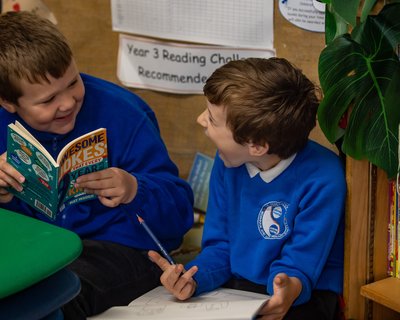 Donate today and together, we can change a child's life story
Become a Literacy Champion volunteer
Are you passionate about making a difference in your community or organisation? Do you love to share the joy of reading and advocate for the power of literacy to change life stories? Join with us at the National Literacy Trust as a volunteer and together we can empower your community to thrive.
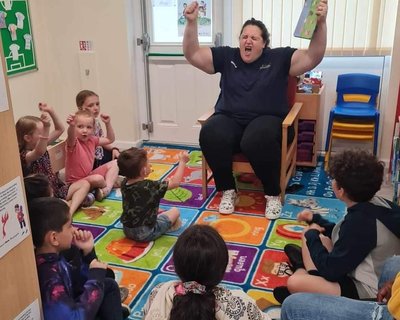 Donate today and together, we can grow a generation of readers
How can businesses support Reading for Pleasure?
We believe that cross-sector partnerships are a powerful way to amplify and further develop support for reading for pleasure in schools, homes, prisons and communities.
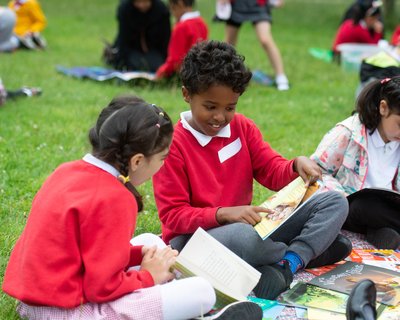 Donate today and together, we can reach more families with fun community activities
Reading for pleasure as a family
Explore ways you and your child can grow a love of reading at home, whether that is together as part of your daily routine or by supporting older children to disappear into a place of imagination and discovery.
 Donate today and together, we can equip more educators who will inspire children with a love of reading
What has football done for reading? (Quite a lot actually)
We know that motivation is a critical driver of reading engagement. Discover more about our Sports and Literacy programmes and how we leverage sporting interests and passions as a gateway to reading.
 Donate today and together, we can train more volunteers to support families and change a child's life story
The future of literacy: Multimodal reading
Download the first paper in our Future of Literacy series which explores how we must redefine what it means to be a reader in the digital, audio and visual age.