
Comics are not a diversion from literacy: they are a dynamic and vital part of it.
Our recent research revealed that in the face of steeply declining levels of engagement with reading, children and young people are still drawn to reading materials like comics and graphic novels. It highlights the role of comics and graphic novels as essential tools to (re)ignite enthusiasm in a pastime that is struggling to engage young people.
The research prompts us to consider what is the future of literacy? What counts as “real reading”, and do we need to redefine what it means to be a reader, writer and creator in 2026 and beyond?
Lucy Starbuck Braidley, Head of School Libraries at the National Literacy Trust, contributed to our recent Future of Literacy multimodal reading paper, where she explored the evidence around comics and graphic novels as valid forms of reading, and demonstrated the enduring value of these multimodal texts and their vital role in the literacy landscape.
As we step into the National Year of Reading and invite children, young people and adults alike to Go All In and discover how their existing passions, interests and pastimes can ignite a love of reading, we wanted to share Lucy’s reflections on the power of comics and unpick the significance of visual literacy, both at home and in the classroom.
Over to Lucy...
What does the research say?
Given the frequent use of word and image across many forms of media in the modern era, it is perhaps not surprising that narratives which combine both forms, particularly comics, are growing in popularity and striking a chord with contemporary readers as they navigate the breadth of visual information that modern technology provides access to.
The National Literacy Trust’s Annual Literacy Survey tracks reading attitudes and behaviours over time. In 2025, we surveyed more than 110,000 children and young people aged 5 to 18 across the UK. An examination of long-term trends in reading attitudes and motivation highlights how visual texts have remained relevant and engaging to young readers against a backdrop of declining reading for enjoyment rates.
Despite wider declining trends, comics and graphic novels have remained buoyant, with digital comics growing in popularity over the past seven years and print comics remaining steady.
Indeed, while most other forms of reading on screen have stagnated or fallen since 2017, comics have bucked the trend with digital reading rates increasing (13.8% in 2017 - 18 to 14.3% in 2025). Young people’s reading of print comics has also dipped only slightly during this time (32.2% vs 29.2%); the shallowest decline of any reading material that we ask children and young people about.
Comics and graphic novels: What is the appeal?
Responses from children and young people in our latest Annual Literacy Survey suggest that this enduring appeal stems from the relaxation, enjoyment and visual richness comics provide.
A dominant theme across the responses was the visual appeal of comics. Children and young people expressed a deep appreciation for the artwork, illustrations and designs that make stories come alive. The visual nature of comics not only attracted them but also supported understanding and engagement.
Multimodal texts like comics and graphic novels have the ability to remain relevant to readers across a changing reading landscape and yet, to date, they have sat outside much of the mainstream thinking around approaches to literacy, particularly within the education system.
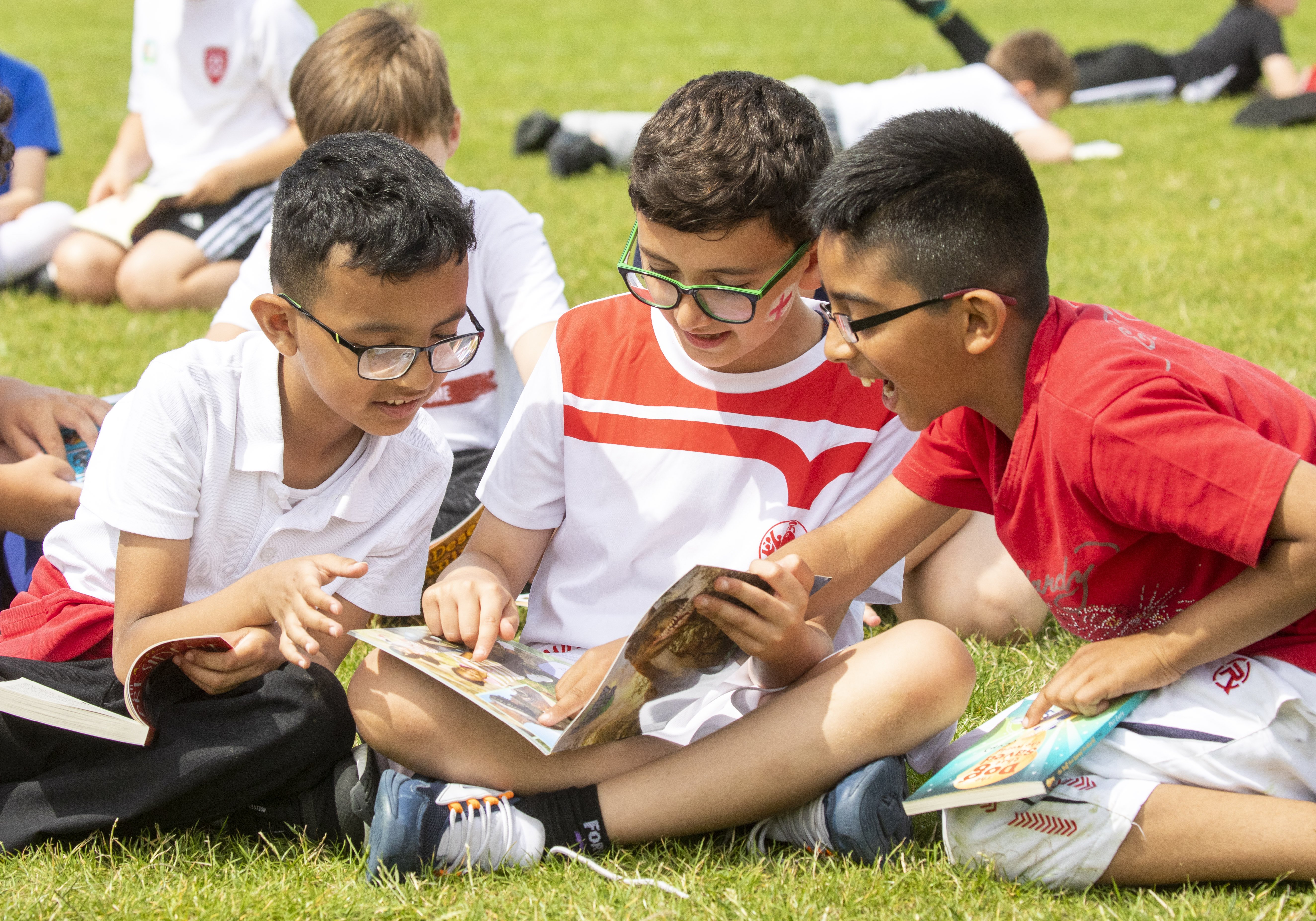
Comics at home: Visual appeal creates a powerful shared reading experience
Comics often provide a powerful reading experience at home and can appeal to a wide range of readers and age ranges.
Their visual appeal, links to popular culture, and the ability to enjoy them quickly and collaboratively make comics well-suited to family reading.
Parents sometimes underestimate comics, assuming they “don’t count” as real reading, but evidence shows they can help develop:
- comprehension,
- sequencing skills, and
- a lifelong love of stories.
Shared comics reading, whether print, digital or web-based, can also foster intergenerational enjoyment, giving families opportunities to talk about characters, humour and narrative together.
Recognising comics as a valid literacy practice at home is therefore crucial in building confidence and engagement among a wide range of readers.
Their visual appeal, links to popular culture, and the ability to enjoy them quickly and collaboratively make comics well-suited to family reading.
Comics in the community: A way to (re)engage and be social
Comics also play an important role in the wider community. Libraries report that graphic novels, manga and comics are among their most borrowed items, and many now run dedicated comic clubs, zine-making workshops and author/illustrator events to engage children and young people and support them to share often untold, personal narratives.
Beyond libraries, comic conventions and cultural festivals provide inclusive spaces where young people can connect their own reading to wider communities of interest.
Importantly, comics can help tackle issues of equity: weekly comics are often more affordable than other books and graphic novel collections are increasing available in local libraries and accessible through digital lending platforms.
When communities champion comics as a legitimate and valued form of reading, they create opportunities for children and young people who might not otherwise find a way into literacy.
When communities champion comics as a legitimate and valued form of reading, they create opportunities for children and young people who might not otherwise find a way into literacy.
Comics across the curriculum: A tool for developing a wide range of literacy skills
Our vision for the Future of Literacy sees visual literacy, including the use of comics, woven across the curriculum in both fiction and non-fiction forms. The case for this has a clear evidence base; studies across a range of age groups have demonstrated how comics can be used by educators as an effective tool for engagement, enhancing retention of information and developing critical thinking skills and comprehension across a range of subjects including science, languages and English (Faria et al. 2024; Aleixo and Sumner 2017; Krusemark, 2016; Jones 2020).
Currently, the use of comics as a teaching tool is not standard practice in either primary or secondary classrooms across the UK. Educators report having a lack of knowledge and confidence around the form, and that a persistent stigma around its legitimacy as both a reading material and a creative output limits its use in the sector, despite growing evidence of its impact on attainment, attitudes towards reading and wellbeing (Comic Art Europe 2025; National Literacy Trust, Clark et al 2024).
Comics offer a unique reading experience; whilst the proliferation of fast-paced image-based social media encourages us to scroll past, skim the top line information and move on, the image-based narratives in comics have the potential to encourage students to develop skills of slow looking and analysis (Tishman, 2017; Stewart and Koopmans 2025), both crucial skills which directly link to critical and media literacy.
The explicit teaching of visual literacy alongside traditional literacy education and critical literacy will provide a powerful framework through which we can equip young people to analyse and question information that they are presented with. As well as equipping children with skills to effectively interpret multimodal communication, visual literacy has wider applications across a range of subjects.
The significance of visual literacy in education
The worlds of technology and science are becoming ever more image based, with complex information now best represented in image form. In many aspects of science, including medicine, professionals are required to compare, analyse, interpret and look for patterns across a range of images on a regular basis – visual literacy skills which can be effectively developed in the classroom across a range of academic subjects.
Drawing alongside writing is not just for the early years, it encourages students to synthesise information, make meaning visually and verbally, and reflect deeply on content. This process of creation supports metacognition, narrative understanding and the development of visual literacy skills that are essential in a media-rich, image-driven society.
Read the article in full
You can read Lucy’s commentary in full in the first paper of our Future of Literacy series. Lucy’s chapter is positioned next to discussions on other reading formats which are already part of children and young people’s every day – digital reading and audiobooks - arguing for their conscious and strategic integration into literacy teaching, learning and cultural practice.
How to use comics and visual formats in the classroom to engage readers
Download our classroom resources
- FREE resource: Using graphic novels in the classroom
- FREE resource: Comics Rule!
- FREE resource: How to run a successful manga club in your school
- PREMIUM resource: Tales from the Inner City by Shaun Tan – literacy transition project
Discover more about becoming a premium member here.
Book our expert-led training
- 19 May and 10 June 2026: two-day training The Big Picture: Lucy will be delivering fascinating two-day visual literacy training in the spring.
- 13 and 20 March 2026 - Teenage reading seminars: Explore routes into reading for secondary school pupils. Hannah Berry - an award-winning comics creator, writer, cartoonist and illustrator - will be sharing her expertise as part of a five-person panel.
- 20 March 2026 - Primary conference 2026 | Beyond the book: routes into reading
- 6 July 2026 - Secondary conference 2026: Book your place on our summer Secondary conference and hear from a range of experts including UK-based Japanese manga creator and illustrator Chie Kutsuwada.
Further reading
- Read our 2023 research: Children and young people's engagement with comics in 2023