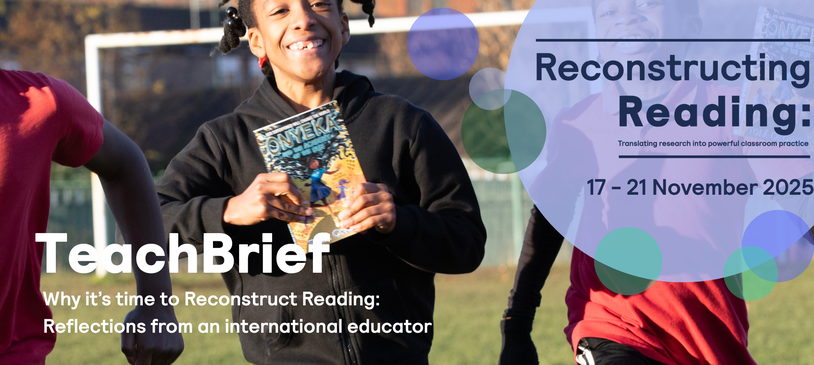
This year, we brought together international literacy thought leaders to launch Reconstructing Reading, a groundbreaking new conference dedicated to exploring innovative approaches to reading instruction.
The literacy landscape is changing – and schools around the world are adapting to the social and technological needs of their pupils. How we approach fluency and comprehension must also incorporate the shifting social factors that shape how each child learns and experiences reading. It’s time to rebalance the connection between teaching reading and reading for pleasure. It’s time to reconstruct reading.
We spoke with English teacher Jasmine LePalme, from Cheongna Dalton School in Incheon, South Korea. Working with multilingual learners at an important stage for acquisition of key reading skills, Jasmine reflected on the insights and strategies shared at Reconstructing Reading, and how these help meet the opportunities and challenges in an international school context.
Don't miss Reconstructing Reading 2026 – sign up here to be notified when registration opens.
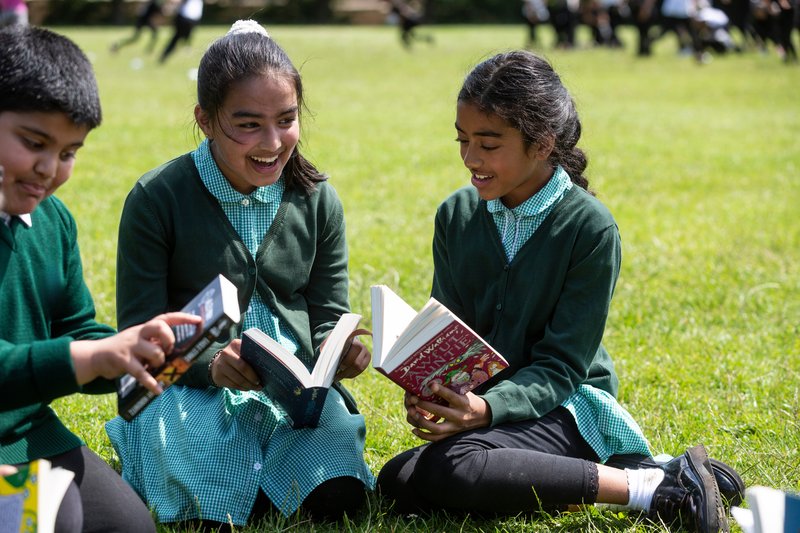
Creating access and joy: students discover reading in formats that work for them.
Insights to teaching reading in an international context
Jasmine's bio:
I am currently a Middle School ELA teacher at an international school in South Korea. I teach Grade 6 and Grade 7 English, working with students ages 11–13. I support a wide range of learners, including multilingual/EAL students and students with IEPs for a variety of learning needs.
What does the reading culture look like in your school?
Reading is strongly emphasised across all divisions of our school, from the First Program through high school. In Middle School, where I teach, we begin every week with a 30-minute SSR (Self-Sustained Reading) period during House time, and students participate in the Accelerated Reader (AR) program as a way to receive House points throughout the year.
Within the English department, we actively explore ways to make reading more engaging and accessible. In Secondary, teachers display 'What I’m Reading' posters outside our classrooms, we read alongside students during class reading time, and we are gradually shifting toward more book-club style units in Middle School to provide students with greater choice and ownership over the novels they read.
Our First Program Director also works closely with parents of younger learners to help them understand the importance of reading at home and how to best support their children’s literacy development. Beyond classroom instruction, our school hosts multiple book fairs each year, and our librarians work hard to bring in authors for presentations and Q&A sessions. These events create exciting opportunities for students to connect with literature, build enthusiasm, and see themselves as part of a wider reading community.
What brought you to Reconstructing Reading?
I’m always looking for ways to make reading more enjoyable and accessible for all learners. Growing up, I loved reading, but I’ve noticed a shift where many students struggle to find that same joy. This conference felt like an opportunity to hear from experts, gather new ideas, and deepen my understanding of how to support students, especially those who are less confident or less motivated readers.
As someone who grew up as a multilingual learner myself, I also understand firsthand how essential it is to receive the right literacy support. When the foundational skills aren’t securely in place, reading can quickly shift from being something enjoyable and rewarding to something overwhelming and burdensome. This personal experience makes me especially committed to finding strategies that make reading accessible and empowering for all students.
I was also interested in learning practical techniques I could bring into my classroom to help students reconnect with reading in ways that feel meaningful, inclusive, and engaging.
What were your conference highlights?
Jasmine gave us a rundown of the Reconstructing Reading webinars she enjoyed - or learned from - the most:
Dr. Sarah Moseley – Valuing all texts and promoting student choice
Dr. Moseley’s session reinforced the importance of valuing all forms of reading, whether it’s graphic novels, audiobooks, fanfiction, magazines, or traditional print novels. Her emphasis on student choice in both what and how students read really resonated with me. It aligned closely with what I strive to practice in my classroom: when students have control over their reading formats and materials, engagement and confidence naturally grow.
Professor Victoria Murphy – Depth over breadth in vocabulary instruction
Victoria Murphy’s talk on supporting EAL learners was incredibly impactful. She highlighted that vocabulary learning should focus on depth, not simply accumulating more words. Her examples about words like “volume” and “solution” showed how easily students can be confused when they only know one meaning of a term. This reminded me that comprehension challenges often stem from assumptions we make about students’ vocabulary knowledge. It was a clear call to teach vocabulary more intentionally and meaningfully.
Dr. Sinéad Harmey – The Role of movement in early literacy development
Sinéad Harmey’s webinar highlighted the essential role of movement, fine-motor development, and hands-on interaction with materials in early literacy. At a time when classrooms are becoming more digital, her message was an important reminder that students still need physical engagement such as turning pages, holding writing tools, making marks. Her talk encouraged me to continue balancing digital tools with traditional materials to support students’ full literacy development.
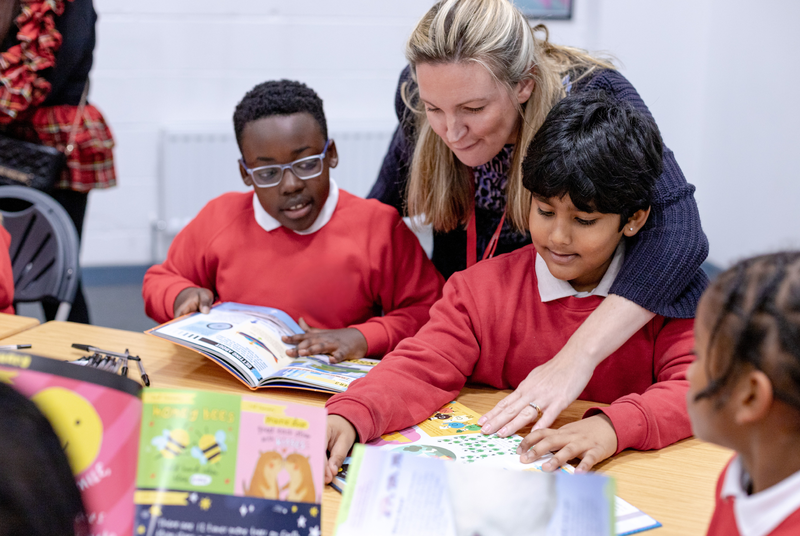
Scaffolding success helps all learners tackle challenging texts with confidence.
Did anything challenge your understanding of how to teach and support reading?
One session that truly challenged my thinking was Timothy Shanahan’s discussion on moving away from leveled texts. His argument that matching students to “just-right” texts can unintentionally limit learning, was eye-opening. Instead, he encourages teachers to keep the text complexity high and adjust the scaffolding to support every learner.
This idea reshaped how I think about access and expectations. Shanahan’s research suggests that even our struggling readers can make greater gains when working with on- or above-grade-level texts, as long as the right instructional supports are in place. It pushed me to rethink how I select reading materials and how I can scaffold more intentionally to support comprehension and confidence.
Which key takeaway will you be using in the classroom to support reading culture?
A key takeaway I will bring back to my classroom is the importance of choice, access, and depth in reading instruction. From valuing all text types, to teaching vocabulary with greater nuance, to integrating movement and hands-on literacy experiences, this conference reminded me that students thrive when reading feels meaningful, personalized, and achievable.
I plan to:
● Continue offering more choice in both reading materials and reading formats (print, digital, audio, visual).
● Teach vocabulary with a deeper focus on multiple meanings, contexts, and applications.
● Maintain a balanced approach between digital tools and physical literacy experiences.
● Explore ways to scaffold grade-level texts more effectively so all students can access rich, challenging material.
Overall, the conference reinforced my commitment to building a reading culture rooted in joy, inclusivity, and intentional, research-driven practice.
Looking ahead to the National Year of Reading
As the National Year of Reading approaches, it’s time to rediscover how we teach and support reading for every learner. Our CPD is here to enhance literacy practice for individual practitioners or your whole school team. Here’s what’s coming up to help boost reading outcomes in your setting.
- Teaching Reading in KS2 CPD: Delve into reading comprehension to develop meaningful strategies that boost outcomes at this online CPD.
- Meeting the Needs of Children Using English as an Additional Language: In this CPD from CLPE, explore the key provision, experiences and teaching approaches that support EAL learners throughout their primary school experience.
- Disciplinary reading in secondary subjects: This course explores the importance of developing academic reading skills to enable students to access the secondary curriculum in all subjects.