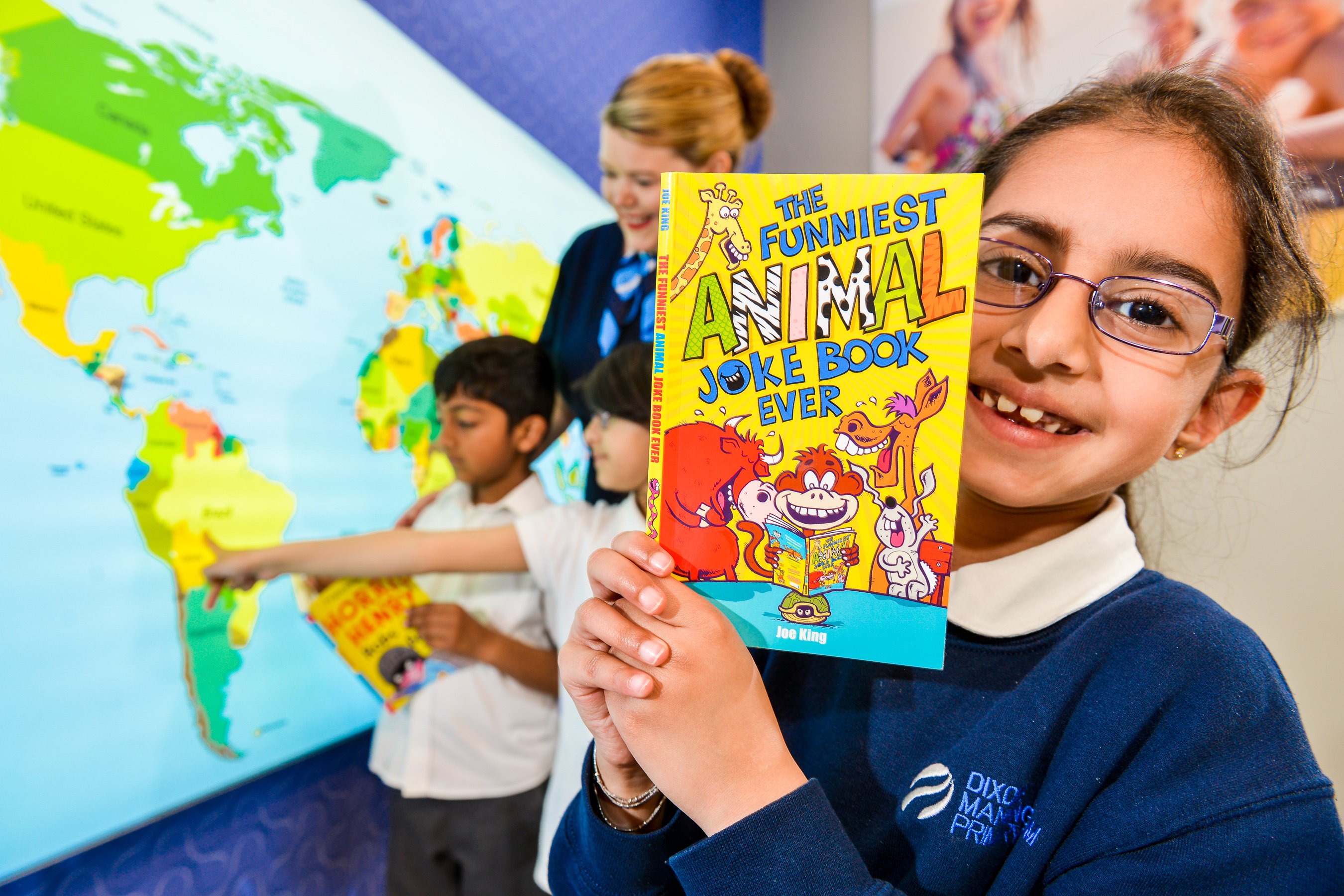
Celebrate Non-Fiction November
What is National Non-Fiction November?
Non-Fiction November is an annual celebration that was created by the Federation of Children’s Book Groups. Its aim to highlight the joy and value of factual reading for young readers and beyond.
What is the theme for National Non-Fiction November 2026?
This year's theme is Reading is an Adventure. Across topics such as bugs, animals, people, places, nature and adventures at home, children and young people are encouraged to read about their interests, and to apply what they discover in a practical way.
Why celebrate National Non-Fiction November in your school or setting?
As our research demonstrates, providing pupils with the opportunity to read and explore non-fiction plays a vital role in helping them to learn about their world, as well as fostering reading for pleasure. It is therefore essential that pupils have access to a high-quality and engaging non-fiction collection.
Our resources are designed to help you explore non-fiction with your class, and celebrate the different perspectives and enjoyment it brings.
Non-Fiction November 2026: Reading is an Adventure
Flexible non-fiction reading resources for ages 4 to 16
This Non-Fiction November, encourage children to discover that reading can take them anywhere. From exploring space and learning about wildlife to uncovering history and meeting inspiring people, non-fiction opens the door to endless adventures.
Find out more about Non-Fiction November.
This free resource provides a range of engaging, flexible activities designed to help children develop curiosity, build knowledge and discover the joy of reading for pleasure through non-fiction texts.
- Early Years: Through exploration, discovery and real-world experiences, they can bring non-fiction to life and turn every book into a new adventure.
- Ages 5 to 7: Read about a topic that interests you, create an Adventure Book page, and share what you discovered with others.
- Ages 7 to 11: Use non-fiction reading to inspire a real-world adventure, then contribute an article to a class Adventure Guide magazine.
- Ages 11 to 14: Read about a topic, take the learning beyond the page through an investigation or activity, and document your adventure in a collaborative publication.
- Ages 14 to 16: Explore high-quality non-fiction, undertake a related real-world experience or investigation, and produce an authentic piece of non-fiction writing inspired by your discoveries.
There’s no fixed delivery time, this session is intentionally flexible. You might choose to run it as a full hour-long activity or break it into shorter 20-minute segments during tutor time. The format is adaptable to fit your schedule and teaching style.
These resources are free to download from the file list below.
Why non-fiction reading is important
In our research, more than half (56%) of children and young people told us that they read non-fiction. We also found that children and young people who read non-fiction are more engaged with environmental issues.
Overall, this report found that more children and young people who read non-fiction were motivated to read for educational purposes, to satisfy curiosities, to foster social connections and to support their mental wellbeing.
Read the full report on Children and young people's non-fiction reading.
Those who read non-fiction are more likely to want to take care of the environment compared with those who don't read non-fiction (68% vs 49%).
Premium non-fiction resources
If you hold premium, whole-school membership, check out these further resources for exploring non-fiction this November: