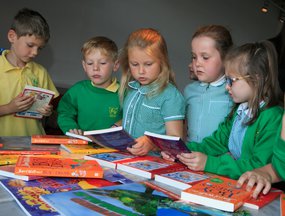
Reading engagement is about more than whether children and young people choose to read in their free time. It also relates to what they read and how they read it, and our research shows this involves a wide range of material, from fiction and non-fiction to song lyrics, comics, news, fan fiction and poetry.
This report is based on responses from children and young people who took part in our Annual Literacy Survey in 2026, but also explores how engagement with different reading materials has changed over time, and the role that print and digital formats play in young people's reading lives.
Key findings
Children and young people engaged with a wide range of reading materials in 2026
- Children and young people read a wide range of materials in 2026. Song lyrics were the most widely read material among those aged 8 to 18 (70.4%), followed by fiction (65.0%) and non-fiction (52.8%). Comics or graphic novels (45.7%), news (42.3%) and fan fiction (33.0%) were also read by substantial percentages of children and young people, while more than 1 in 4 (26.5%) read poetry.
- Among boys, fiction came first, followed by song lyrics and non-fiction, while among girls, song lyrics came first, followed by fiction and non-fiction. More younger than older children and young people read comics or graphic novels, poems and fan fiction, while news reading increased substantially with age.
- Even children and young people who said they did not enjoy reading reported engaging with many of the same materials as those who did enjoy reading. Among this group, more than two thirds read song lyrics and more than half read fiction at least once a month.
Reading engagement increased across all materials in 2026
- Compared with 2025, more children and young people reported reading every material measured. The largest increases were seen for comics or graphic novels (increasing from 38.2% to 45.7%), news (35.5% to 42.3%) and fan fiction (26.5% to 33.0%).
Longer-term trends show a more mixed picture
- Looking back to 2017/18 shows that magazine reading declined most substantially over this period, while comics or graphic novels and song lyrics were read by more children and young people in 2026 than in 2017/18.
Print and digital formats play different roles depending on what is being read
- In 2026, fiction, non-fiction, comics or graphic novels and magazines were primarily read in print. Almost half (48.9%) read fiction in print at least monthly, although more than 1 in 4 (27.3%) also reported reading fiction digitally. By contrast, song lyrics, news and fan fiction were read more digitally than in print.
- Longer-term trends do not suggest a straightforward move from print to digital reading. Print reading declined for most materials between 2017/18 and 2026, while digital reading generally remained stable or increased. For example, fiction reading in print fell from 59.5% to 48.9%, while digital fiction reading increased from 19.9% to 27.3%. The increase digitally, however, did not match the decline in print.
Overall, findings highlight the breadth and diversity of reading materials that feature in children and young people's lives today, reflecting different interests, purposes and reading experiences. Supporting reading engagement means recognising the many ways children and young people encounter texts and providing opportunities to engage with a variety materials and formats.