
We nearly all listen to music in some form - everyone has their own personal relationship with it. Whether we listen to help us relax, to be entertained, to feel motivated or comforted, or maybe to simply pass the time. Music can transcend generations and connect cultures. There is something inherent within music, melody, lyrics, the rhythm that so many people are passionate about and can find connection with.
Research shows that music has the ability to light up nearly all areas of the brain: it can activate our emotional responses through memory; music can stimulate the systems which govern pleasure, motivation, and reward; as well as firing up the body’s motor system.
That’s a powerful, mood-altering, stimulating, body moving tool right there! In light of our own recent research, which highlights that motivation is key to (re)engagement with both reading and writing (we’ll come on to in more detail later), it is definitely important to consider the powerful role that music can play not only in our day to day lives, but as a mechanism to understand and develop literacy skills across both reading and writing.
As we step into the National Year of Reading and encourage everyone to Go All In on their passions – how can we harness the ubiquitous appeal of music and song lyrics to (re)ignite a love of reading and writing?
This is something our Young Writer’s team, including Josie Dibnah and Ki-Li Watkins, have been exploring in depth to address declining levels of writing enjoyment among children and young people. Here they dive into the latest research and offer teachers ways to use music in the classroom. Over to you Josie and Ki-Li….
What our research tells us about the relationship between writing and music
Our Annual Literacy Survey, which in 2025 collected insight from 114,970 children and young people across the UK, produced some concerning headlines. The report revealed that just 1 in 4 (26.6%) children and young people aged 8 to 18 said that they enjoy writing in their free time and just 1 in 10 (10.4%) children and young people told us that they wrote something daily in their free time. However, when we dig deeper into the research, for both reading and writing, an interesting pattern is emerging.
Exploring stories through music and lyrics has emerged as an effective way to re-engage young people with reading and writing for pleasure. Slightly more than 3 in 5 (60.7%) young people ages 8-18 regularly read song lyrics digitally. Even among those who say they don’t enjoy reading, young people are choosing to engage with lyrics, with the same percentage (60.7%) reading song lyrics on a screen in their free time. Writing song lyrics was particularly popular with 8- to 11-year-olds, with more than 1 in 4 (25.4%) telling us they write song lyrics on a screen.
Sparking re-engagement with reading and writing is possible. Let’s tune into the power of storytelling through sound and music as a gateway into reading and writing, making it relevant by linking to young people’s cultural references and media.
What do we mean by storytelling through sound?
Music can be felt through rhythm and expressed through movement or sign language. It can allow us to see a snippet of someone else’s world or see our own lives reflected back at us. Music is a connector to words - words which can in turn lead us to countless worlds.
Storytelling through sound can mean many things, dependent on the individuals in your class. It could be:
- using items in the classroom to make rhythms or to represent a character,
- using BSL or Makaton to express the flow of a song,
- listening to tunes as a prompt for writing,
- creating collaborative raps, or
- reading lyrics as a tool for analysing a moment in history.
Why is it helpful to use music and song lyrics as a way to equip and empower children and young people with literacy skills?
While music is a day-to-day feature in early years settings, songs and rhythm can lose traction or legitimacy as children get older. However, across all age ranges, music helps to nurture language, motor skills, emotional intelligence and collaboration. This applies outside of the classroom and in other settings too.
Feedback from eight participants of our New Chapters lyric-writing workshop in a Young Offenders institute suggested that song lyrics could be used to increase confidence and self-belief, with seven out of eight participants telling us that the creative lyric-writing workshops made them feel better in general and inspired them to think more about their future.
Allowing time for songs, music and sound not only fires up creativity and helps young people to express themselves but can also be a way in to developing a love of stories, writing and reading.
How can music be used in the classroom?
Here are some ways that music can be easily embedded into teaching practice.
Key Stage 1: Storytelling through sound
Read a class book which is rich in characters and emotions. Focus closely on pages where there are shifts in feelings for example, nervous to confident. Invite pupils to bring these moments to life using musical instruments, body percussion or found classroom sounds, like tapping desks or rustling paper. This simple activity helps children explore storytelling in a playful, creative way.
Key Stage 2: Create a storytelling rap
Introduce pupils to rap as a form of storytelling. Build a shared bank of rhyming words linked to a theme from the class text. Use this word bank to model writing a rap with a four-beat bar, clapping out the rhythm to show how lyrics fit the beat. This structured approach helps pupils develop vocabulary, rhythm and confidence when crafting their own storytelling raps.
Key Stage 3: Tell a story through music
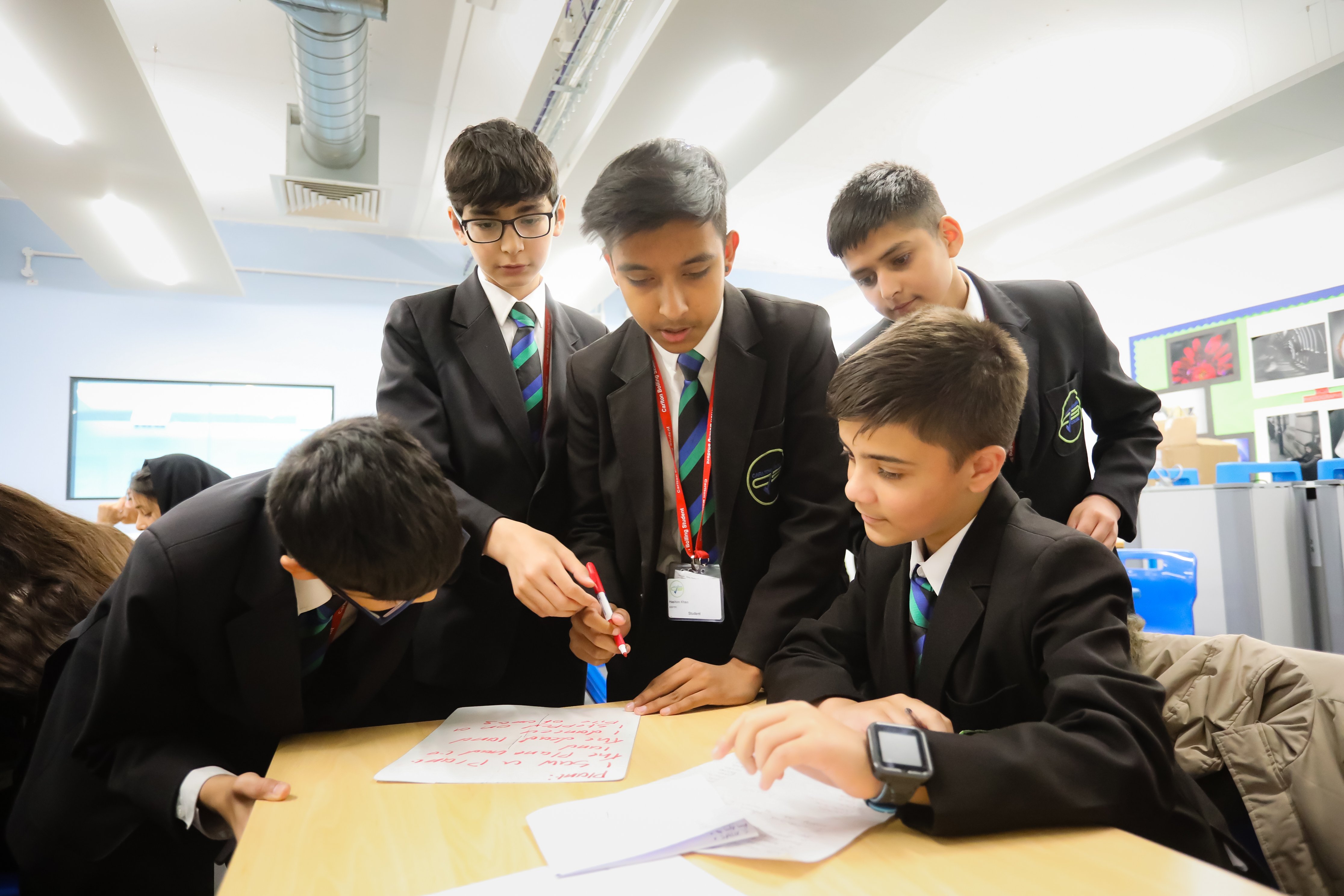
Invite students to create a playlist that tells a story about a topic meaningful to them e.g. personal experiences or social issues. They start by writing five key statements about the topic, then identify the mood or feeling of each. Next, they choose a song to match each statement, building a story through music. Finally, students pick one song and explain why it’s significant, reflecting on its mood, key lyrics, and the moment or idea it represents. This activity encourages creativity, storytelling, and critical thinking through sound and emotion.
Across all ages, music can be used more broadly as a tool for engaging reluctant readers and writers in the classroom and beyond. Start a conversation about the music they love, encourage them to explore the lyrics of their favourite artist or Go All In and research the history of their preferred music genre. Let’s press play on using music as a creative way to explore stories and powerful tool to spark interest and inspire a new generation of readers, writers and listeners.
National Storytelling Week 2026
This year, National Storytelling Week is the first Go All In Together moment for the National Year of Reading and the theme this year is Soundtrack your story – so as we’ve discussed in this article, it will be a week exploring the magic of storytelling through sound, lyrics and rhythm. There will be free online events, each accompanied by free teacher resources which meet the curriculum requirements for writing across the four nations and provide a flexible menu of storytelling activities through music for early years, KS1, KS2, and KS3.