The 2026 awards
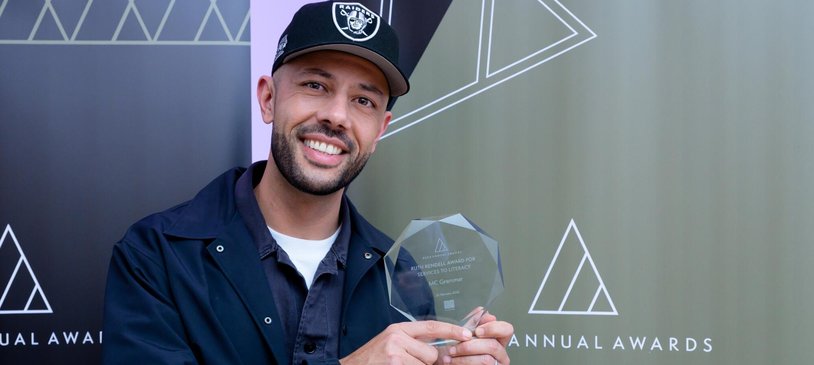
The winner of the Ruth Rendell Award 2026 is… Jacob Mitchell aka MC Grammar.
The award-winning teacher and rapper was recognised for using the power of rap to take reading to the heart of popular culture.
MC Grammar spent the last year reading and rapping across the country, spreading the message of how books have changed his life to a wider audience than ever before and inspiring more children to read for pleasure. He is also an ambassador for the National Year of Reading 2026.
Visit this page in the autumn for information on nominations for the 2027 awards.
About the Ruth Rendell Award
The Ruth Rendell Award seeks to celebrate authors who go above and beyond to champion literacy, and to support children, young people or adults to develop their literacy skills and to build a lifelong love for reading.
The award was launched in 2016 by the National Literacy Trust and the Authors’ Licensing and Collecting Society (ALCS) in honour of the author Ruth Rendell, who tirelessly championed literacy throughout her lifetime and supported the National Literacy Trust since its foundation in 1993.
Anyone can nominate an author for this prestigious, annual award to acknowledge the work they do outside of their expected duties.
Nomination criteria for the Ruth Rendell Award
We welcome nominations for authors from anyone – including publishers, libraries and library associations, booksellers and booksellers associations, schools, charities and individuals.
Nominees can be traditionally published or self-published, and each nominee should have gone above and beyond to promote literacy development for either adults or children in the UK over the past year.
Examples of this could include:
- Working with literacy or education charities to support literacy development
- Working with schools, adult education settings or community groups to improve literacy levels
- Using their platform to highlight literacy issues (e.g. social media)
- Lobbying the government or other influential groups on literacy issues
- Participating in events, workshops, awards, festivals and initiatives dedicated to reading and writing
Nominees should not be currently employed by the National Literacy Trust or the Authors’ Licensing and Collecting Society (ALCS).
Previous winners
- 2025: Tom Percival
- 2024: Greg James & Chris Smith
- 2022/23: Dapo Adeola & Nigel Lungenmuss-Ward
- 2021: Cecilia Knapp
- 2020: Karl Nova
- 2019: Tom Palmer
- 2017/18: Cressida Cowell
- 2016: Andy McNab